

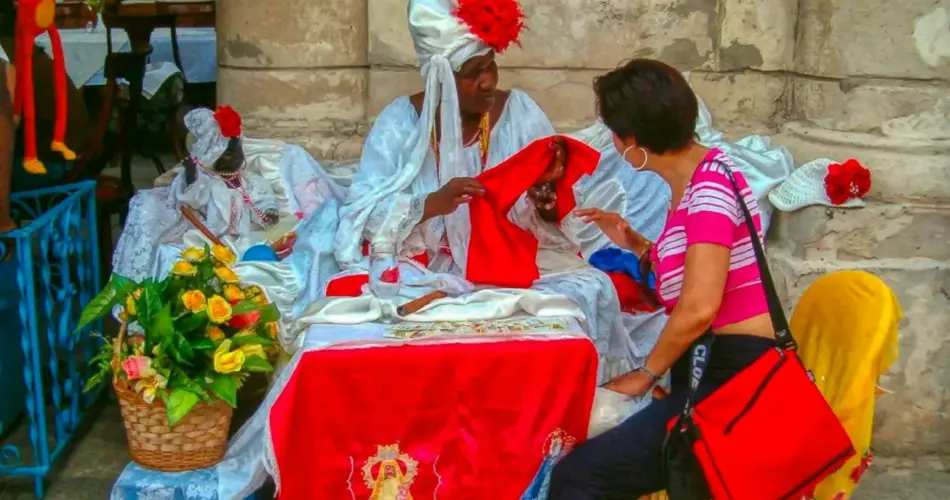
Cuba offers an unfiltered experience that package tours can’t match, but traveling independently requires specific preparation that goes beyond typical vacation planning. Power outages lasting 12-18 hours outside Havana, fuel shortages that disrupt transport schedules, and a cash-only economy with two different exchange rates create challenges most travel guides gloss over. You’ll need to book casas particulares instead of hotels, arrange shared taxis when buses sell out, and navigate a mandatory digital form that confuses even experienced travelers. This guide provides the step-by-step instructions and cost breakdowns you need to travel to Cuba independently in 2026, from filling out government paperwork correctly to knowing which neighborhoods have 24-hour electricity. The rewards – authentic paladares serving lobster for $4, conversations with locals in vintage car taxis, and staying in family homes – make the extra planning worthwhile.
Documents and planning before you go
You can’t board your flight without three specific documents: a valid passport, a Cuban tourist card, and proof you’ve completed the D’Viajeros digital form. Missing any of these means you’re not getting on the plane, regardless of how much you paid for your ticket.
Visa requirements and the D’viajeros form
The Cuban tourist card functions as your entry visa and costs €70-88 ($75-95 USD) depending where you purchase it. You can buy it online through services like EasyTouristCard or at airline check-in counters, though airport purchases often cost 20-30% more. The card grants 30 days in Cuba with the option to extend another 30 days at immigration offices inside the country for approximately €23 ($25 USD). Your passport must remain valid for at least six months beyond your departure date from Cuba.
The D’Viajeros form replaced paper entry cards in 2024 and requires completion exactly 7 days before your flight – not earlier, not later. You’ll need your passport details, tourist card number, flight information, and the exact address of your first night’s accommodation including the municipality. This municipality field trips up most travelers because Havana divides into multiple administrative zones. If you’re staying in Old Havana, select “Habana Vieja.” Vedado falls under “Plaza de la Revolucion,” while Miramar belongs to “Playa” municipality. The system generates a PDF with a QR code that you must show at airline check-in and Cuban immigration – save it to your phone and print a backup copy.
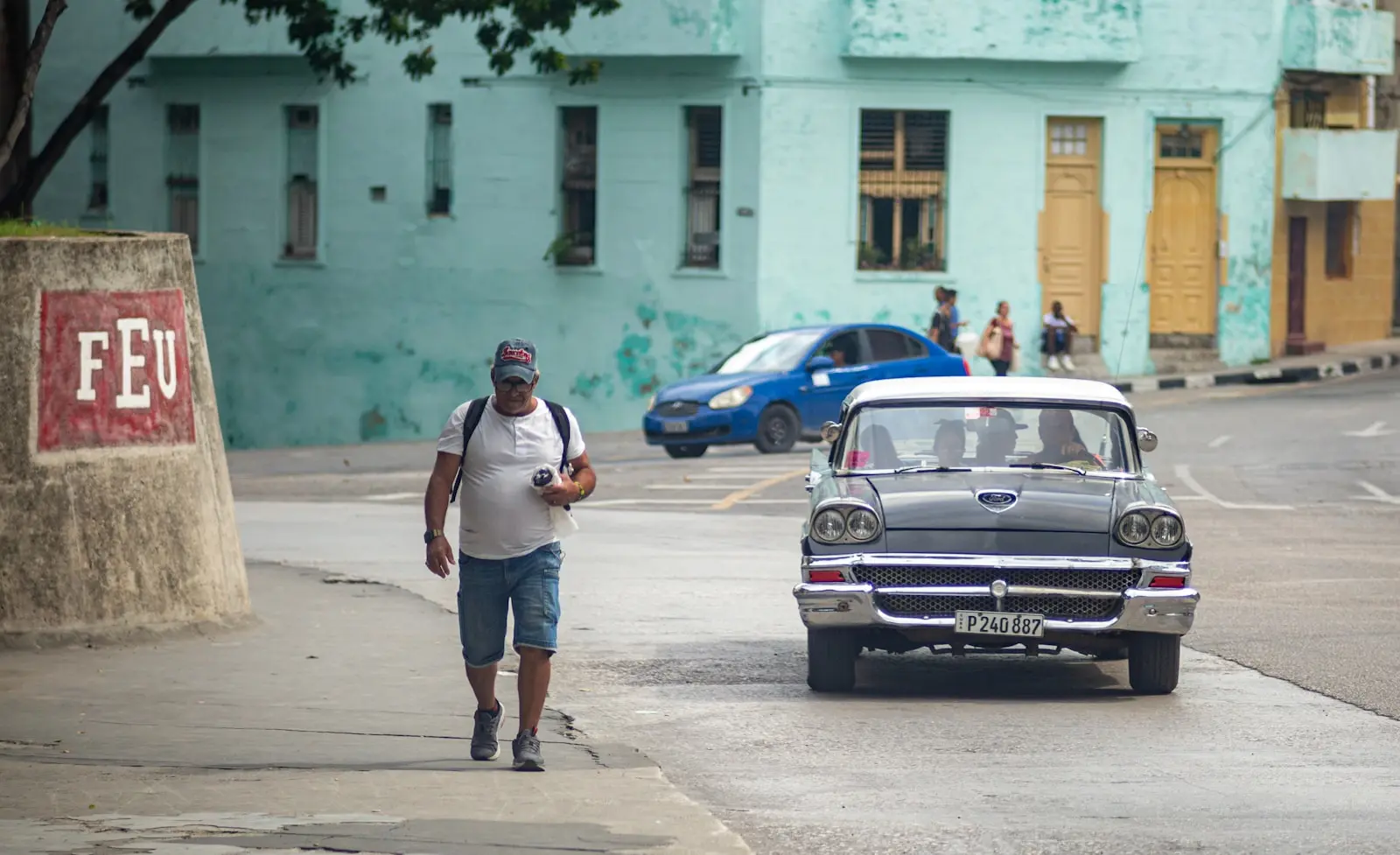
Photo by Ricardo IV Tamayo
US citizens face additional requirements under the “Support for Cuban People” travel category. You must declare this purpose when booking accommodation on platforms like Airbnb and maintain records of your activities for 10 years, though enforcement remains minimal for tourists staying in casas and eating at private restaurants.
Practical tip: Complete your D’Viajeros form while sitting next to your booking confirmation emails. The system asks for your accommodation’s complete address including street number and postal code, information that’s easy to copy-paste but frustrating to hunt down if you close those emails. Screenshot your completed form immediately after submission because the system doesn’t email it unless you manually add your email address in an optional field most people skip.
Budget planning for independent travel
Independent travel to Cuba costs significantly less than organized tours but demands carrying large amounts of cash since ATMs use unfavorable exchange rates and credit cards rarely work. A comfortable daily budget runs €56-79 ($60-85 USD), though bare-bones travelers can survive on €33-46 ($35-50 USD) by eating street food and taking only buses.
| Budget tier | Daily cost | Accommodation | Food | Transport | Activities |
|---|---|---|---|---|---|
| Ultra-budget | €33-46 ($35-50) | Basic casa €23-28 ($25-30) | Street food €7-9 ($8-10) | Buses only €5-9 ($5-10) | Free walking €0 ($0) |
| Comfortable | €56-79 ($60-85) | Nice casa €28-37 ($30-40) | Mix of paladares €14-18 ($15-20) | Bus + colectivo €9-14 ($10-15) | Paid tours €9-14 ($10-15) |
| Moderate | €93-140 ($100-150) | Premium casa €46-70 ($50-75) | Restaurants €23-37 ($25-40) | Private taxis €18-28 ($20-30) | Multiple tours €18-37 ($20-40) |
Bring your entire trip budget in cash – either US dollars or euros work equally well at the current street exchange rate of 330 Cuban pesos per dollar or euro. For a 10-day trip at comfortable spending levels, pack €700-930 ($750-1,000 USD) minimum, with €1,400-2,330 ($1,500-2,500 USD) providing a safety margin for emergencies or spontaneous upgrades. Mandatory travel insurance adds another €28-46 ($30-50 USD) for policies covering medical evacuation, required for entry but rarely checked.
How to book accommodation independently in Cuba without agencies or tour packages
Casas particulares – private homes licensed to host foreigners – provide the backbone of independent travel to Cuba, offering authentic experiences at €18-46 ($20-50 USD) per night versus €93-186 ($100-200 USD) for equivalent hotels. You’ll recognize legal casas by the blue anchor symbol displayed near their entrance, distinguishing them from red anchors marking Cuban-only accommodation with lower standards.
Understanding casas particulares
Casa hosts register every guest’s passport and tourist card number with local authorities, a legal requirement that feels intrusive but protects both parties. Most casas include breakfast for an additional €3-5 ($3-5 USD) featuring fresh fruit, eggs, bread, and strong Cuban coffee – better value than restaurant breakfast and a chance to get local advice about your day’s plans. The government taxes casa operators monthly based on their declared capacity, not actual bookings, which explains why hosts eagerly fill empty rooms even at last-minute discounted rates.
Rooms typically include private bathrooms, air conditioning essential during power outages when fans stop working, and varying levels of hot water reliability. Ask explicitly about backup power sources if you’re traveling between May and October when afternoon outages stretch longest. The best hosts function as concierges, booking your onward transport, recommending restaurants their friends operate, and calling ahead to partner casas in your next destination.
Comparing booking platforms for maximum flexibility and avoiding common mistakes
| Platform | Booking fee | App works in Cuba | Reviews available | Payment timing | Best for |
|---|---|---|---|---|---|
| Airbnb | 14-16% to guest | No, use browser | Yes, extensive | Before arrival | First 2-3 nights, US travelers (legal category) |
| Booking.com | 0% to guest | Yes | Yes, moderate | Some at property | Booking while traveling |
| Direct/knock | 0% | N/A | No | Cash at property | Budget travelers, Spanish speakers |
| Casa referral | 0% | N/A | Word of mouth | Cash at property | Flexible travelers, authentic connections |
Airbnb dominates pre-trip bookings because photos and reviews reduce uncertainty, but the app stops functioning inside Cuba due to connectivity restrictions – save confirmation details before arrival. US travelers must select “Support for Cuban People” as their travel reason when booking, a mandatory dropdown that satisfies OFAC requirements. Book your first two or three nights before arrival to guarantee somewhere to sleep after your flight, then embrace the casa referral network where your current host calls their friend in your next city, often securing better rooms than online listings show.
Havana offers the only Cuban hostel scene with dorm beds at €5-18 ($5-20 USD) in properties like Backpackers Hostel in Centro or Mango Habana Vieja near the Malecon. Solo travelers benefit from the instant social network hostels provide, though outside Havana you’ll find only casas.
Practical tip: When messaging potential casa hosts before booking, ask two specific questions: “Do you have solar panels or battery backup?” and “Is your neighborhood experiencing scheduled power cuts?” Hosts answer honestly because they want satisfied guests, and this 30-second check can mean the difference between charging your phone overnight versus sitting in darkness. Properties in Havana Vieja and Plaza de la Revolucion typically maintain 24-hour power while suburban areas face daily 12-18 hour cuts.
Getting around Cuba: transport options and costs for routes between major cities
Cuba’s transport infrastructure operates on two parallel systems – official Viazul buses that you book online, and unofficial colectivos (shared taxis) that you arrange through casa hosts or street negotiation. Both cost roughly the same, but reliability, comfort, and flexibility differ dramatically depending on current fuel availability.
Viazul buses connect major tourist destinations on fixed schedules
Viazul’s modern coaches with air conditioning follow set routes between tourist hubs, operating when fuel supplies permit. Book tickets 1-2 days ahead through their website (viazul.com), though the platform requires VPN access from inside Cuba and frequently shows false availability. Payment accepts only Visa, Mastercard, or American Express – no cash, no other cards.
| Route | Cost | Duration | Distance | Frequency |
|---|---|---|---|---|
| Havana – Trinidad | €24 ($26) | 6-8 hours | 331 km (206 mi) | 2-3 daily |
| Havana – Vinales | €11 ($12) | 3.5 hours | 178 km (111 mi) | 2 daily |
| Havana – Cienfuegos | €19 ($20) | 4 hours | 243 km (151 mi) | 2 daily |
| Havana – Santiago | €56 ($60) | 15-16 hours | 861 km (535 mi) | 1-2 daily |
| Havana – Varadero | €9 ($10) | 3 hours | 140 km (87 mi) | Multiple daily |
Arrive at the bus station 90 minutes before departure officially, though 60 minutes usually suffices for boarding. Buses depart on time regardless of late arrivals, and drivers rarely speak English beyond basic route names. The main Havana terminal (La Coubre station) sits 2 km (1.2 mi) from Old Havana, requiring a €4-9 ($5-10 USD) taxi ride.
Colectivos provide door-to-door service with negotiable departure times
Shared vintage American taxis depart from casa to casa, eliminating bus station trips while costing only 30-50% more than Viazul. Your casa host arranges the booking by calling their network of drivers, typically for 8-9 AM departures the next morning. Expect four passengers plus driver in a 1950s Chevrolet or Buick with minimal legroom but maximum character.
The standard colectivo from Havana to Trinidad runs €28-32 ($30-35 USD) per person, Havana to Vinales costs €18-23 ($20-25 USD), and shorter hops like Havana to Playa Larga take €23-28 ($25-30 USD) for the 5-hour journey requiring a mid-route vehicle swap. Prices stay consistent across drivers since informal coordination maintains rates, though you can sometimes negotiate €5 discounts for early morning (6 AM) or late afternoon (4 PM) departures when drivers need to fill seats.
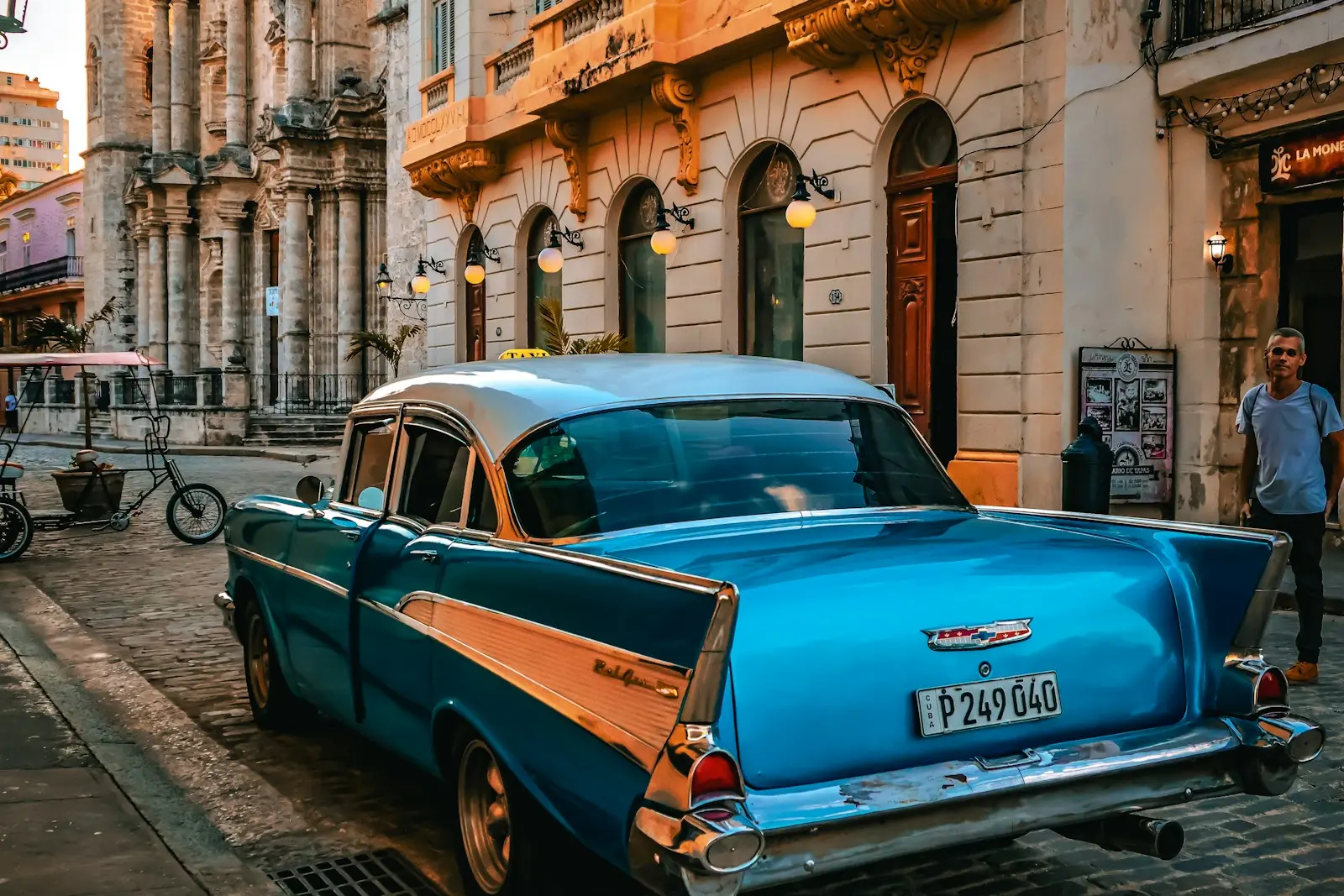
Photo by Meg von Haartman
Cuban colectivo drivers treat highways like racetracks, regularly hitting 140 km/h (87 mph) on roads with wandering livestock and unlit cyclists. The speeding stems from earning potential – more daily trips mean more fares. If your driver’s speed makes you uncomfortable, use the Spanish phrase “Tengo miedo de velocidad” (I’m afraid of speed) or offer an extra €5 to slow down. Sit in the back seat where collision forces impact less severely.
Car rental warning for 2026 conditions
Renting a car costs €46-74 ($50-80 USD) daily before fuel, which runs €4.40 per gallon ($5/gallon) when you can find it. Fuel shortages create 2-4 hour queues at functioning stations, with altercations common as desperation grows. Foreign license plates mark you as having money and gas, making vehicles theft targets in parking areas. Hire a private driver with their own vehicle for €28-46 ($30-50 USD) daily instead – they know which stations have fuel and handle all navigation stress while you watch the countryside.
Practical tip: Ask your casa host this exact question when booking colectivo transport: “Que pasa si no hay gasolina?” (What happens if there’s no gas?). A good driver explains their backup plan – whether they have reserved fuel, know alternative stations, or how they’ll handle delays. This conversation establishes expectations before you’re stranded mid-route, and professional drivers appreciate clients who think ahead rather than complain during problems.
Staying connected: internet and phone options that actually work in Cuba
Cuba’s internet infrastructure ranks among the world’s least developed, with connectivity so unreliable that you’ll need multiple backup strategies for basic tasks like booking your next bus or messaging your casa host. Tourist SIM cards provide the most consistent access, though even these fail during power outages that disable cell towers for hours.
Tourist SIM cards from Cubacel offer data packages and unlimited messaging
Cubacel operates the only tourist SIM service through their “Tur” line sold at major airports and ETECSA offices in provincial capitals. The 24/7 airport pickup desk in Havana’s Terminal 3 saves you hunting for weekday-only ETECSA stores that close for lunch and frequently run out of SIM cards.
| Option | Data | Minutes | SMS | Validity | Cost | Best for |
|---|---|---|---|---|---|---|
| Tur Plus | 10 GB | 100 min | 100 SMS | 30 days | €28-32 ($30-35) | Trips over 10 days, heavy users |
| Tur Basico | 4 GB | 20 min | 20 SMS | 7 days | €18-23 ($20-25) | Short trips, light usage |
| Airalo eSIM | 1 GB | 0 min | 0 SMS | 7 days | €7 ($7.50) | eSIM-compatible phones, backup |
Both Cubacel plans include unlimited WhatsApp and Facebook Messenger that don’t count against data allowances, making them practical for staying in touch with casa hosts and booking accommodation. Insert your SIM, dial *666 to activate, and expect 3G speeds that load text quickly but struggle with photos. The service works everywhere cell towers have power, which during 2026 means intermittent outages outside Havana lasting several hours daily.
Download a VPN before leaving home – ProtonVPN’s free tier works reliably and lets you access blocked services including Viazul’s booking site, Gmail (sometimes restricted), and various US-based platforms. Cuba blocks VPN downloads from inside the country, so this step must happen before your flight.
WiFi alternatives cost less but deliver frustration
ETECSA WiFi cards sold at parks and public plazas cost 1-2 CUC (convertible pesos) per hour of access at hotspots marked by crowds of Cubans staring at phones. Connection speeds crawl, multiple devices compete for bandwidth, and the service disappears entirely during power cuts or rain. Tourist hotels sell their own WiFi access for €5-9 ($5-10 USD) per hour, highway robbery that only makes sense for emergency email checks when your SIM has failed.
Practical tip: Before your flight, download offline versions of essential tools: Maps.me with Cuba’s full map data, Google Translate’s Spanish language pack for offline translation, a screenshot of every casa confirmation with address and phone number, and your return flight details. When your SIM card stops working at 3 PM during scheduled outages, these offline resources let you navigate streets, communicate basic needs, and show taxi drivers addresses without panic-downloading while standing in the tropical sun.
Managing costs and currency in Cuba’s complex financial system
Cuba operates entirely on cash using only Cuban pesos (CUP) after eliminating the dual currency system in January 2021, but two wildly different exchange rates coexist – the official government rate that destroys your money’s value, and the street rate where actual commerce happens. Understanding this distinction saves hundreds of euros on a typical trip.
The official exchange rate at banks and ATMs gives you 120 CUP per US dollar or euro. The street rate used by casa hosts, restaurants, and taxi drivers provides 330 CUP per dollar or euro. Withdraw €93 ($100) from an ATM and you receive 12,000 CUP worth €28 ($30) at street rates – you just lost €65 ($70). Exchange the same €93 through your casa host and you get 30,690 CUP worth the full amount. Every experienced traveler brings their entire budget in cash and exchanges through trusted intermediaries rather than ATMs.
CADECA official exchange offices theoretically offer better rates than ATMs but frequently close due to cash shortages, and when open they process transactions so slowly that 45-minute waits for simple exchanges occur regularly. Your casa host provides instant exchanges at competitive street rates, typically 320-330 CUP per dollar/euro with no fees or waits. They profit marginally while you save enormously compared to official channels.

Photo by Meg von Haartman
Daily spending examples help calibrate budgets: street pizza costs 500 CUP (€1.40/$1.50), local beer runs 250 CUP (€0.70/$0.75), a casa breakfast costs 1,000-1,650 CUP (€3-5/$3-5), paladar dinners range from 4,950-8,250 CUP (€15-25/$15-25), mojitos at tourist bars cost 990-1,650 CUP (€3-5/$3-5), and restaurant lobster – illegal for Cubans to sell but served openly to tourists – runs 1,320-6,600 CUP (€4-20/$4-20) depending on preparation and location. Budget travelers eat street food for lunch and splurge on paladar dinners, while comfortable travelers add cafe breakfast before casa breakfast, afternoon drinks, and don’t track pizza purchases.
Practical tips for life on the ground in Cuba
Daily life in Cuba operates by different rules than most destinations, where the restaurants locals recommend stay empty due to food shortages, where speaking Spanish poorly gets you better prices than fluent Spanish suggests wealth, and where the best meals come from family dining rooms rather than restaurants.
Where to eat and what to expect
Paladares – privately owned restaurants operating from homes or small storefronts – serve dramatically better food than state restaurants at similar prices, typically €9-23 ($10-25) for dinner with drinks. The best paladares hide down residential streets with minimal signage, discovered through casa host recommendations rather than Google searches that surface tourist traps with English menus and prices inflated 200%. Ask your host “Donde come usted?” (Where do you eat?) for authentic recommendations.
US travelers must avoid state-run restaurants appearing on the government’s banned establishment list, though enforcement focuses on hotels rather than hassling tourists over lunch choices. Paladares automatically qualify under “Support for Cuban People” regulations since they’re private businesses, making them both legally compliant and better dining options simultaneously.
Photo by Meg von Haartman
Expect bland food by international standards – Cuba’s economic isolation limits spices to salt, garlic, and occasional cumin, while the menu repeats ham, cheese, rice, beans, and pork across most establishments. Order items listed in CUP rather than USD pricing to get portions intended for Cubans rather than tourist-sized plates that cost triple. Tap water causes guaranteed digestive problems for foreign stomachs, so drink bottled water at €1.80 ($2) per 1.5-liter bottle or bring a Water-to-Go filtration bottle from home that makes tap water safe.
Menu items frequently appear as unavailable when you try to order – “no hay” (there isn’t any) greets requests for 30-50% of listed dishes on typical days. This scarcity reflects genuine food shortages rather than laziness, so have second and third choices ready rather than expressing frustration that accomplishes nothing.
Language barriers and essential phrases
English works in Havana’s tourist zones and nowhere else. Download Google Translate’s offline Spanish dictionary before arrival because you’ll use it constantly for reading menus, negotiating prices, and asking directions. Master five essential phrases that solve 80% of communication needs:
- “Cuanto cuesta?” (How much does it cost?) – use before every taxi, purchase, or service
- “Donde esta…?” (Where is…?) – followed by pointing at your phone showing a map
- “No hablo espanol” (I don’t speak Spanish) – surprisingly useful for ending unwanted conversations
- “Tiene…” (Do you have…?) – for asking if restaurants have dishes or stores have items
- “Puede ayudarme?” (Can you help me?) – Cubans respond generously to polite requests
Book English-speaking casa hosts through Airbnb’s language filter if your Spanish anxiety runs high, though Spanish-only hosts charge €5-9 ($5-10) less nightly and often provide more authentic experiences once you establish communication through translation apps and hand gestures.
Practical tip: Screenshot the Spanish phrase “Mi telefono necesita cargar. Hay electricidad ahora?” (My phone needs charging. Is there electricity now?) and show it to restaurant staff during power outages. Many paladares run generators to keep food cold and will let you charge devices for 20-30 minutes while you eat, solving the dead-phone problem that leaves tourists unable to navigate or communicate. This small courtesy saves you from wandering streets looking for powered outlets, and buying a meal justifies the electricity use in ways that asking for free charging doesn’t.
Dealing with 2026 challenges: power outages and fuel shortages
Cuba entered 2026 facing its worst infrastructure crisis in 30 years, with daily blackouts stretching 12-18 hours in provincial cities and fuel shortages disrupting transport schedules that buses and colectivos previously followed reliably. These challenges make independent travel harder than even two years ago, but understanding patterns and preparing backup plans keeps trips functional rather than disastrous.
Power outages affect everything from phone charging to restaurant meals
Scheduled blackouts rotate through neighborhoods on published timetables that change weekly based on national grid capacity. Havana Vieja, Centro Habana, and Vedado maintain electricity 22-24 hours daily as priority zones, while Vinales, Trinidad, Cienfuegos, and other tourist towns face cuts from 11 AM to 6 PM and again from 11 PM to 6 AM most days. Unscheduled nationwide outages lasting 24-48 hours still occur monthly when power plants fail or fuel deliveries delay.

Ask potential casa hosts during booking: “Tienen paneles solares o baterias?” (Do you have solar panels or batteries?). Properties with backup power keep fans, lights, and phone charging available during cuts, worth €5-9 ($5-10) extra nightly. Bring a 20,000+ mAh power bank from home – Cuban stores don’t stock them – and charge every device whenever power flows rather than waiting until batteries drain.
Restaurants with generators continue serving food during outages while those without close their kitchens but sometimes sell drinks from coolers. Ask “Tienen generador?” (Do you have a generator?) when choosing lunch spots during peak outage hours from 1-4 PM. The larger paladares invest in backup power because serving lunch during blackouts when competitors close doubles their customer volume.
Offline navigation becomes essential when outages kill cell towers and internet access vanishes. Maps.me downloaded before your trip shows street layouts and saved location pins even when completely offline, superior to Google Maps that requires periodic data connection to refresh map tiles. Save your casa address, bus station location, and planned restaurant spots as pins so you can navigate during the 40-60% of each day when mobile internet doesn’t function.
Fuel shortages create transport delays and route cancellations
Gasoline shortages that started in 2024 continue disrupting Cuba’s transport network, with government fuel deliveries prioritizing Havana and Varadero while provincial cities face severe rationing. Lines at functioning gas stations stretch 100+ vehicles with 2-4 hour waits, and altercations between desperate drivers needing fuel to earn money occasionally turn violent according to Canadian government travel advisories updated January 2026.
This reality affects independent travelers through delayed or cancelled Viazul buses, colectivos that want extra payment for fuel costs, and situations where your booked transport simply doesn’t arrive because the driver couldn’t source gasoline. Build one-day buffers between cities in your itinerary – if you must catch an international flight from Havana on day 10, return to Havana by day 8 rather than day 9 to absorb potential delays.
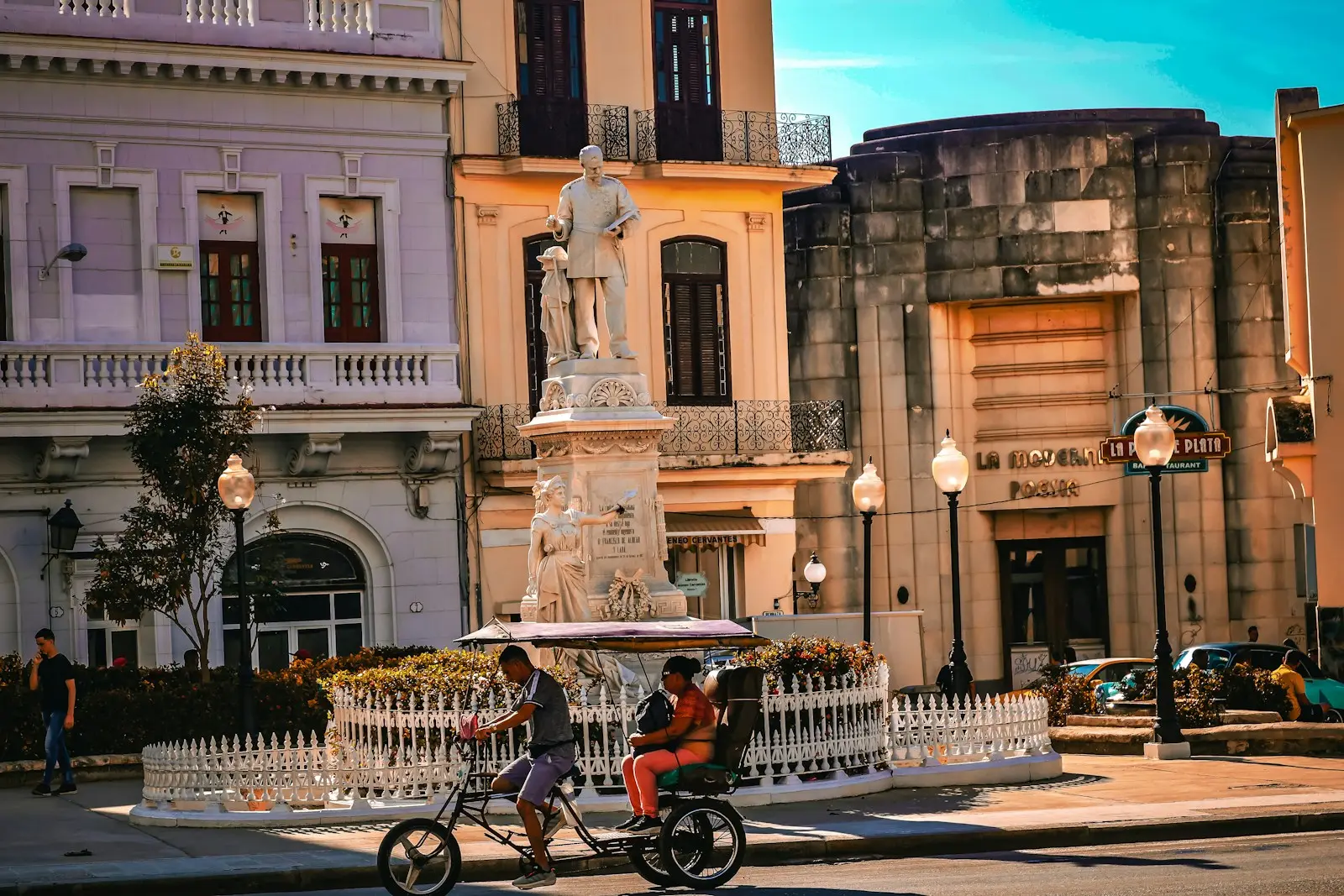
Photo by Meg von Haartman
When booking colectivos, establish upfront what happens if fuel problems cause delays: “Que hacemos si el viaje se retrasa?” (What do we do if the trip is delayed?). Professional drivers explain their fuel reserves and backup plans, while sketchy operators dodge the question. This conversation protects you from drivers demanding extra money mid-route or abandoning trips entirely when stations run dry.
Never rent a car during Cuba’s 2026 fuel crisis – the €46-74 ($50-80 daily) rate plus €4.40 per gallon ($5/gallon) fuel sounds manageable until you spend six hours across two days sitting in gas station queues while your beach time evaporates. Hire a driver with their own vehicle instead – they know which stations have fuel, when deliveries arrive, and navigate the informal networks that keep locals mobile when tourists would be stranded.
Practical tip: Pack a small LED headlamp or flashlight in your day bag rather than leaving it at your casa. When evening power cuts hit while you’re at dinner or exploring the Malecon, you’ll walk back through completely dark streets where even flashlight apps drain your phone battery that you desperately need for navigation. A headlamp keeps your hands free, lights your path without attracting attention like a bright phone screen announcing “tourist with expensive device,” and costs €9-14 ($10-15) before departure versus impossible to find in Cuban stores.
Safety and scams to watch for when traveling independently
Cuba maintains remarkably low violent crime rates compared to other Caribbean and Latin American destinations, with the US State Department assigning it Level 2 risk status – identical to Costa Rica, Peru, and France. You face virtually zero kidnapping, armed robbery, or assault danger, but petty theft targeting distracted tourists happens constantly in predictable patterns that preparation easily defeats.
Pickpocketing concentrates in Old Havana’s narrow streets, Viazul bus terminals during boarding chaos, and crowded markets where bodies press together naturally. Keep cash, phones, and passports in front pockets, money belts worn under clothing, or cross-body bags worn to your front in these zones. The thieves work alone or in pairs using distraction techniques – someone bumps you while asking directions as their partner lifts your phone from a back pocket in the two seconds your attention diverts.
Photo by Pavel
Common scams target newly arrived tourists who haven’t calibrated prices yet: taxi drivers quoting €23-28 ($25-30) for €4.60 ($5) rides, jineteros offering to guide you to “authentic” restaurants where they collect commissions doubling your bill, street vendors selling “genuine” Cohiba cigars that are actually dried banana leaves wrapped in counterfeit bands for €28-46 ($30-50) boxes worth €0.90 ($1), and photographers in period costumes who pose for “free” photos then aggressively demand €5-9 ($5-10) tips while blocking your path. Agree on exact prices before accepting any service, buy cigars only from La Casa del Habano official stores, and politely but firmly walk away from aggressive touts using the phrase “No gracias” while maintaining forward motion.
Official yellow taxis with working meters provide the safest transport option – agree on destinations and approximate fares before entering since meters frequently “break” mid-ride, requiring negotiated prices. Avoid coco-taxis (the yellow egg-shaped motorized tricycles) that lack safety equipment and overturn in accidents, and classic American car taxis without seatbelts that become death traps during the high-speed crashes that kill dozens of tourists annually.
Solo female travelers face persistent catcalling and unwanted attention that rarely escalates to physical harassment but creates constant low-level stress. Strategies that reduce interactions without victim-blaming: wearing headphones (even without music playing) signals unavailability, fake phone conversations occupy you with “someone else,” staying in hostels connects you with other travelers for group exploration, and attending salsa classes at dance schools builds local friend networks that change solo status. The catcalling reflects machismo culture rather than danger signs, but trust your instincts – if someone’s attention feels threatening rather than annoying, duck into a shop or cafe and wait them out.
Practical tip: Photograph your passport information page and tourist card on your phone the day you arrive, then email copies to yourself and save them in Google Drive or similar cloud storage. If thieves steal your bag with both documents, these photos let you visit your embassy and Cuban immigration offices to obtain emergency replacements without the multi-day nightmare of recreating visa information from memory. Take five minutes for this insurance policy that you’ll desperately appreciate if the 1-in-20 worst case happens to you.
How to travel to Cuba independently: putting together a realistic timeline
Most first-time independent travelers to Cuba plan 7-10 days covering Havana plus two other destinations, enough time to experience colonial architecture, rural tobacco valleys, and Caribbean coastline without spending half your trip on transport. Shorter visits work but feel rushed once you account for same-day arrival exhaustion and departure day airport time, while longer trips let you reach eastern Cuba’s Santiago and Baracoa that require 15-16 hour journeys from Havana.
A solid 7-day western Cuba loop follows this pattern: Arrive Havana, spend 2 nights exploring Old Havana and Vedado (Days 1-2), take morning colectivo to Vinales for 2 nights experiencing tobacco farms and limestone valleys (Days 3-4), continue to Trinidad for 2 nights in Cuba’s best-preserved colonial town (Days 5-6), then return to Havana for departure day (Day 7). This route connects three dramatically different experiences using reliable 3-4 hour transport legs that rarely cancel even during fuel shortages.

Photo by Manuel González Asturias, SJ
Five-day trips sacrifice Trinidad by doing Havana-Vinales-Havana, while 10-day itineraries add Cienfuegos between Vinales and Trinidad or extend Trinidad to 3 nights with a day trip to Playa Ancon’s beaches. Three days works only for Havana-only visits exploring different neighborhoods each day – Cuban History Museum, Revolution Square, Malecon sunsets, Fusterlandia art district – before departure.
Avoid detailed hour-by-hour planning beyond accommodation bookings and transport between cities. Cuba’s infrastructure unreliability means scheduled 10 AM museum visits happen at 2 PM after power outages delay opening, recommended restaurants close unexpectedly due to food delivery failures, and “20-minute” walks stretch to 40 minutes when you get lost in unmarked streets. Flexible daily frameworks – “morning: explore Havana Vieja, afternoon: visit museum or beach depending on weather, evening: paladar dinner” – adapt to reality better than rigid schedules that Cuban chaos constantly disrupts.
Author’s commentary: Independent travel to Cuba in 2026 represents one of the last genuinely challenging destinations where infrastructure limitations force travelers to engage authentically rather than insulate themselves through apps and automation. The article delivers exceptional value through its granular cost breakdowns and addresses the critical 2026 reality that most travel guides ignore – sustained power outages and fuel shortages that fundamentally alter how independent travel functions.
What strikes me as most valuable is the dual exchange rate explanation, where the 120 versus 330 peso differential effectively imposes a 175% tourist tax on anyone using ATMs instead of casa host exchanges. This single piece of information can save travelers hundreds of euros on a week-long trip. The step-by-step D’viajeros municipality decoder solves a genuine pain point that strands confused travelers at airline check-in counters. Interestingly, Cuba’s tourism infrastructure peaked in 2018 with 4.7 million visitors but dropped to under 2 million in 2025 as infrastructure deteriorated, meaning today’s independent travelers encounter far less crowded attractions but significantly more logistical challenges than even three years ago.
For anyone committed to visiting Cuba independently, the critical preparation involves bringing entire budgets in cash, downloading offline tools before arrival, and building flexibility into itineraries to absorb inevitable delays – the reward being access to a destination that package tours increasingly can’t deliver reliably.
Frequently asked questions about traveling to Cuba independently
Is it safe to book colectivos through casa hosts I’ve never met before?
Yes, this is the standard and safest booking method since casa hosts stake their reputation and guest reviews on reliable driver networks. Hosts profit minimally from transport commissions (€2-5 per booking) but benefit enormously from satisfied guests who leave positive reviews and recommend their casa to future travelers. The informal system works because bad drivers get cut from referral networks quickly after complaints, creating strong incentives for professional service. Red flags include hosts demanding payment before the colectivo arrives (pay the driver directly) or quoting prices 50%+ above rates mentioned in recent travel forums.
What happens if I run out of cash in Cuba and ATMs don’t work?
Some casa hosts lend small amounts (€46-93 / $50-100) to trusted guests who’ve stayed multiple nights, expecting repayment via bank transfer after you leave Cuba. Western Union operates in major cities but requires a sender abroad with your passport details, charges 8-12% fees, and offices frequently close due to cash shortages or system outages. Your best prevention strategy involves bringing 20-30% more cash than your calculated budget, storing it in multiple locations (room safe, money belt, separate bag pocket), and tracking daily spending to catch budget overruns before reaching crisis levels.
Can I travel Cuba independently without speaking Spanish?
Yes, but you’ll face significantly more challenges and miss authentic interactions that make independent travel rewarding. Download Google Translate’s offline Spanish dictionary before arrival for basic communication like reading menus, negotiating taxi prices, and asking directions. English works in Havana’s tourist zones and high-end casas, but outside these areas you’ll rely heavily on translation apps, hand gestures, and the patience of Cubans who appreciate attempts at basic Spanish phrases. Book English-speaking casa hosts through Airbnb’s language filter if language anxiety runs high, though this limits your accommodation options.
How do I extend my 30-day tourist card once I’m inside Cuba?
Visit any immigration office (Direccion de Identificacion, Inmigracion y Extranjeria) in major cities like Havana, Trinidad, or Santiago at least 3-5 days before your current 30 days expire. Bring your passport, tourist card, proof of accommodation for your extended stay, and approximately €23 ($25 USD) in cash for the extension fee. The process takes 2-4 hours including waiting time, and you’ll receive a stamp in your passport granting another 30 days, for a maximum total stay of 60 days.
Can I book casas particulares after I arrive instead of pre-booking everything?
Yes, you can book casas on arrival, but we recommend pre-booking at least your first 2-3 nights to guarantee somewhere to sleep after your flight lands. Once you’re in Cuba, your current casa host can call their friends in your next destination to arrange accommodation, often securing better rooms than online listings show at negotiated rates. This casa referral network works reliably in popular routes like Havana-Vinales-Trinidad, though you sacrifice the security of confirmed reservations and guest reviews.